
Platinum Group Metals Recycling: Platinum Is 30 Times Rarer Than Gold - Why That Matters for Recycling in 2026
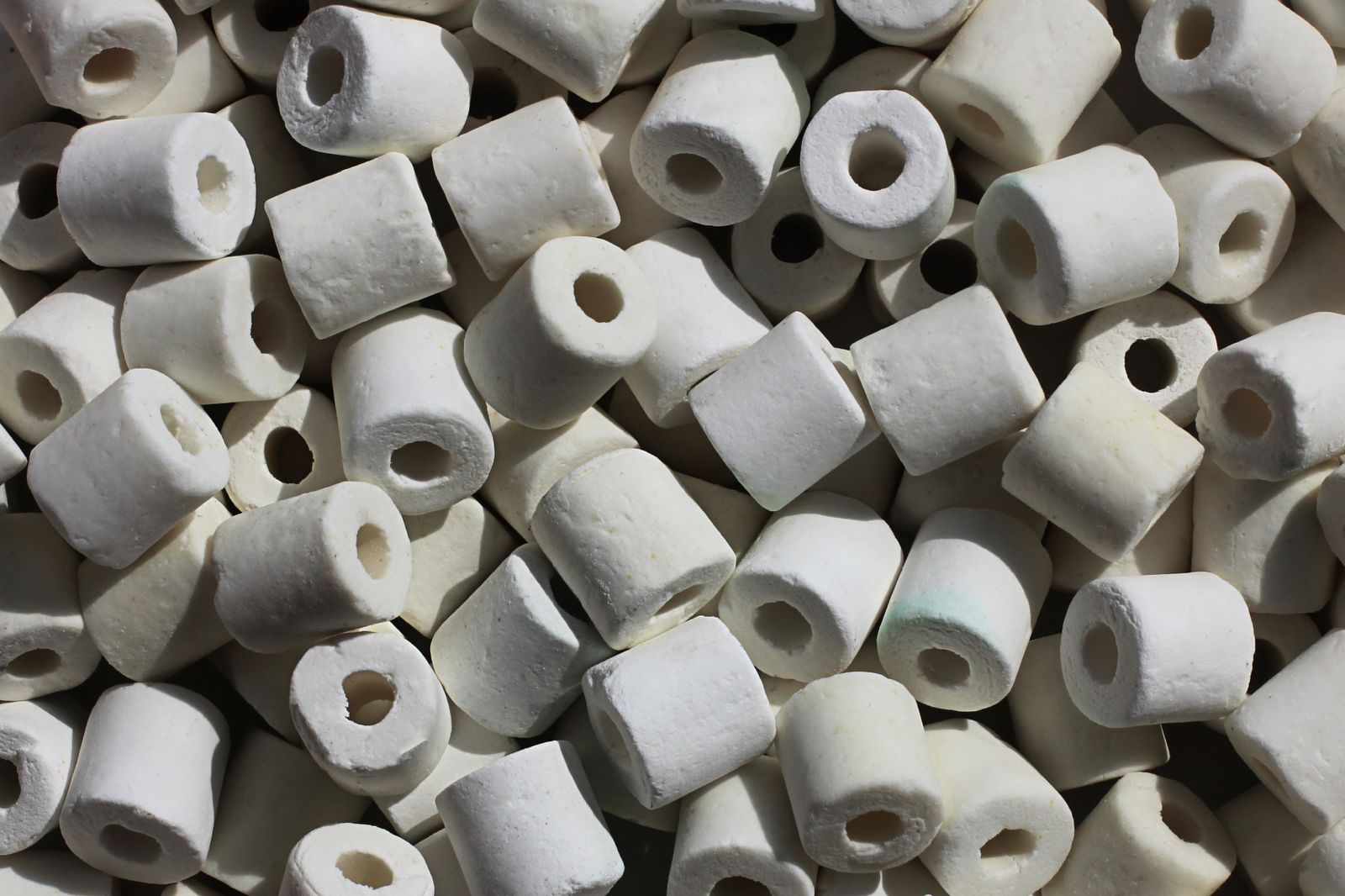
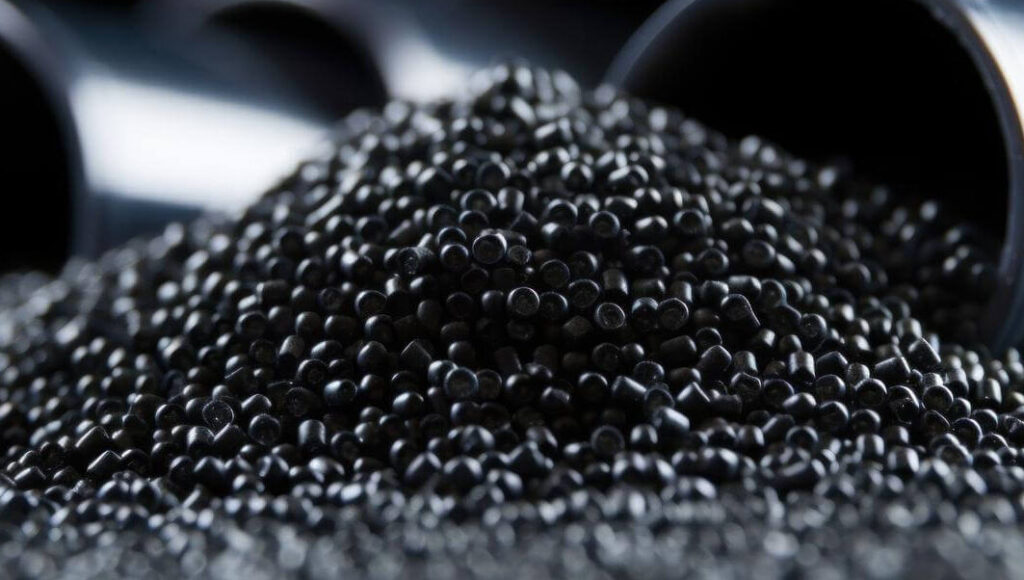
Ceramic catalyst substrate material used in precious metal refining and recovery. These materials can contain platinum, palladium, rhodium, and other platinum group metals that are recovered through certified secondary refining processes.
Six metals. Parts per billion. That’s where the platinum group story starts—not with price charts or policy targets, but with geology. Platinum, palladium, rhodium, ruthenium, iridium, and osmium are so diffuse in the Earth’s crust that recovering them from ore is, by industrial standards, an act of extraordinary precision. Gold is 30 times more concentrated in minable deposits. When a certified refinery pulls more than 99% of platinum back from spent automotive catalysts, it is preserving something that primary mining produces in weeks—recovered in hours.
The PGM market has been tightening for years, and the pressure is now structural. Mine closures in South Africa and Russia, combined with demand growth from hydrogen fuel cells and electronics manufacturing, have moved prices to a point where even small recovery losses in refining matter. India’s position in this market is changing. The country has historically been a consumer of PGMs, importing refined metal to feed its automotive and industrial sectors. That is starting to shift—the volume of end-of-life catalytic converters moving through the domestic waste stream has reached a scale where secondary refining makes hard economic sense, not just policy sense.
Secondary Refining as Critical Infrastructure
for India’s Hydrogen Economy
India’s National Green Hydrogen Mission has set a target of 5 million tonnes of green hydrogen per year by 2030. Reaching it means deploying proton-exchange membrane (PEM) electrolyzers at significant scale—and PEM electrolyzers run on platinum at the cathode and iridium at the anode. Iridium is the more constrained of the two. Global primary production is estimated to be only a few tonnes per year, making iridium one of the most supply-constrained industrial metals. There is no commercially deployed substitute for it in the oxygen-evolution reaction at scale. If India is serious about domestic electrolyzer manufacturing, secondary recovery of iridium from spent PEM stacks and automotive catalysts is not a supplementary option—it represents one of the most practical domestic supply levers currently available.
The broader shift away from primary supply is happening whether India participates in it or not. Output growth from South African and Zimbabwean mines is constrained by geology and energy costs, and that situation is unlikely to improve through the rest of this decade. On the domestic side, India generates substantial volumes of e-waste each year, and the automotive aftermarket produces large quantities of spent catalytic converters. A meaningful share of the PGMs in that material currently leaves the country through informal export channels or is lost in uncontrolled smelting operations. Certified secondary refining changes that equation—converting what is functionally an urban mine into documented, traceable feedstock. ReReldan operates this process in Hyderabad, certified to ISO 9001, 14001, 45001, R2v3, and LEED Platinum standards.
Autocatalyst Collection:
Where Value Is Lost Before the Furnace
India’s spent catalyst collection network is fragmented. Informal dismantlers, aggregators, and scrap traders move material without standardized assay or chain-of-custody documentation. A converter typically changes hands two or three times before it reaches a facility with the equipment to actually measure what’s in it. At each step, the transaction is priced on physical weight or unit count—not on PGM content. By the time the lot reaches a refiner, the original generator has already settled at a price that has nothing to do with the metal value sitting in the substrate.
The financial gap here is real. A high-loading BS VI diesel oxidation catalyst and a low-loading unit from an older vehicle sell at the same per-piece price in the informal market. The refiner knows the difference; the dismantler generally does not, and gets paid accordingly. Changing this requires the collection process itself to be restructured—lots segregated by vehicle class, substrate type, and emission standard before any price is agreed. When a generator brings material to a certified facility and watches the lot being crushed, split, and sampled, the settlement number that comes out of that process is one they can actually interrogate. The current informal chain offers no equivalent.
The Sampling Challenge:
Why Material Heterogeneity Determines Settlement Value
A spent catalytic converter is not a uniform material. PGM loading varies across the length of the monolith, across its radial cross-section, and between wash-coat layers. Thermal sintering—the process by which metal nanoparticles agglomerate at operating temperatures above 800°C—pushes precious metals away from the wash-coat surface and deeper into the ceramic matrix, unevenly. On top of that, manufacturers formulate wash-coats differently depending on the emission standard the vehicle was built for, its engine configuration, and fuel type. Two converters from the same model year can carry meaningfully different loadings.
Representative sampling exists specifically to account for this. The protocol at a certified facility starts with crushing the full lot to a homogeneous powder—no selective sampling from the top of a pile. A riffle splitter then extracts a sub-sample that is statistically representative of the whole. XRF spectrometry screens that sub-sample on-site, confirming approximate platinum, palladium, and rhodium ratios before the material enters the primary fire assay. For high-value or complex lots—spent fuel cell stacks, pharmaceutical residues, electronic contacts—ICP-MS confirmation adds another layer of precision. The arithmetic here is direct: one percentage point of assay error on a tonne of spent catalyst is money that moves from the generator’s settlement to the refiner’s margin. Sampling is not a technical box-tick. It is the mechanism that determines who captures the value in the material.
Ceramic vs. Foil Substrates:
Why the Recovery Workflow Must Match the Material
India’s spent catalyst stream is dominated by two substrate types. They look different, they behave differently in processing, and they require different workflows. Misidentifying one as the other is probably the most consistent source of unrecovered PGM value in informal recycling operations in this country.
Cordierite monolith catalysts (magnesium iron aluminium cyclosilicate, Mg₂Al₄Si₅O₁₈) is the dominant substrate in passenger and light commercial vehicles. The material is brittle, which in this context is a processing advantage. Controlled crushing converts it to a fine powder that feeds predictably into either a pyrometallurgical or hydrometallurgical circuit.
Metallic foil substrates—corrugated FeCrAl alloy sheets coated with the wash-coat—appear in certain aftermarket diesel applications, high-temperature industrial catalytic converters, and stationary engine systems. They do not crush the way cordierite does. Running foil substrates through shredder parameters set for ceramic produces uneven particle sizes that stratify in the sample and compromise assay accuracy. The correct approach starts with mechanical shredding in a cutting mill, then magnetic separation to pull out the bulk iron-chromium-aluminium alloy.
Assay Accuracy and the Transparency Gap in PGM Settlement
Assay results are not interchangeable. A fire assay conducted without witnessed sampling, an XRF-only valuation on a heterogeneous lot, and an assay run on a non-representative sub-sample all produce numbers—but those approaches may result in valuations that do not fully reflect the true metal content of the material. The generator has no basis to push back on a result they did not see produced. This dynamic runs through the entire informal PGM collection chain in India and is the most direct explanation for why generators routinely receive settlements that fall short of what their material is actually worth.
For institutional generators—automotive OEMs, fleet operators, electronics manufacturers, pharmaceutical companies—the same protocol also satisfies the chain-of-custody documentation that R2v3 certification requires for downstream material tracking. ReReldan’s witnessed sampling and XRF screening are standard procedure for every lot, not an optional upgrade.
A Final Calculation
Every gram of platinum-group metal lost to informal processing or imprecise sampling is feedstock that does not come back. At current market prices, those losses add up to something the supply chain can measure—and increasingly, something it cannot afford to absorb. ReReldan’s certified workflows exist to close that gap: material comes in as heterogeneous scrap, leaves as documented, high-purity output with a traceable chain of custody, and feeds back into the manufacturing and energy supply chains that depend on it.
What does your material actually contain? Find out
Disclaimer : The information provided is for educational purposes and reflects general industry practices.
Actual recoveries, metal content, and settlement outcomes depend on material characteristics and processing conditions.
Categories
Recent Posts