
The Hidden Cost of Doing Nothing: What E-Waste Actually Is
E-waste isn’t just broken electronics. It’s a compliance obligation and a recoverable resource at the same time – here’s what actually counts, and why it matters more than most businesses think.
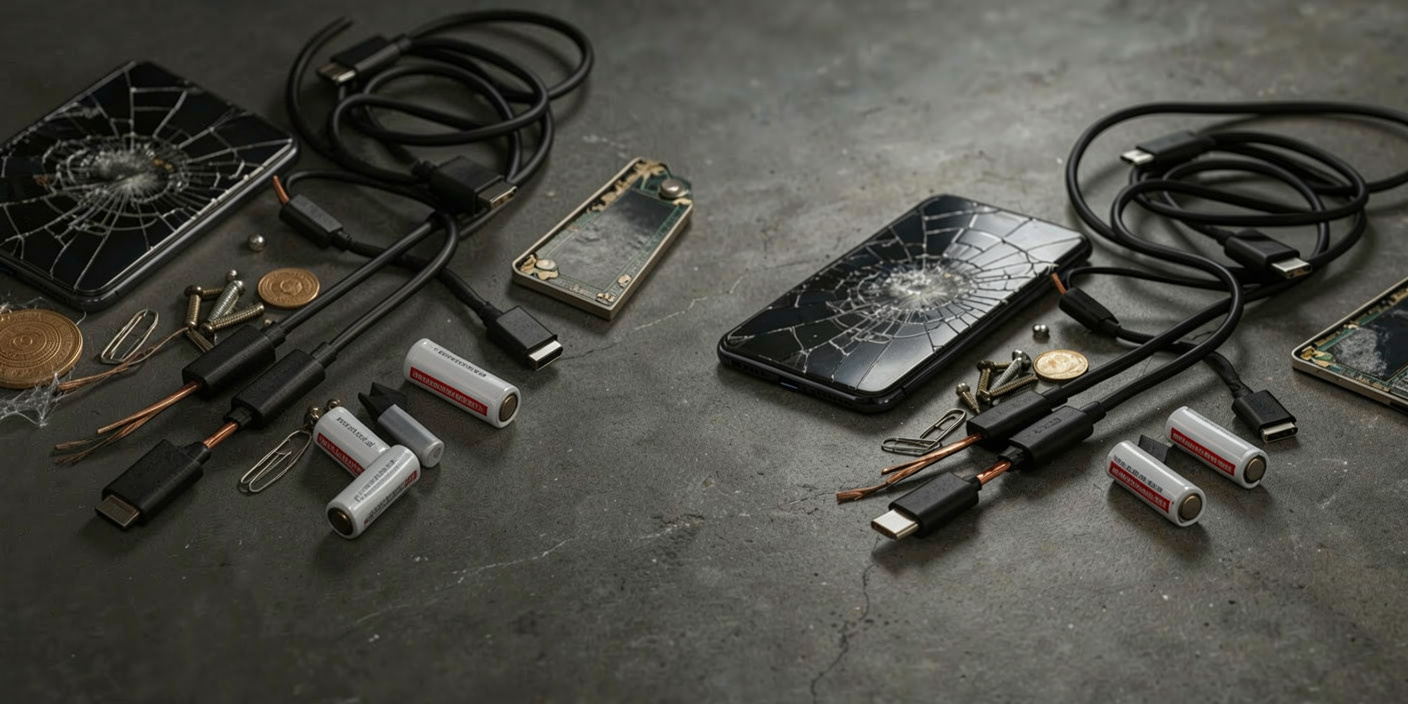
Let’s be honest: most people picture “e-waste” as a drawer of dead chargers and one phone with a cracked screen nobody has thrown out yet. The real picture is a lot bigger. Computers, servers, telecom equipment, medical devices, factory automation systems, even the air conditioning in your office – all of it becomes e-waste eventually, and it’s one of the fastest-growing waste streams anywhere.
Here’s the short version: e-waste is any electrical or electronic product that has reached the end of its useful life and gets discarded, recycled, or refurbished.
What makes it different from a broken chair or a pile of packaging is what’s inside. Some of it is hazardous and needs careful handling. Some of it is recoverable and genuinely worth something. Most waste is only ever one of those things. E-waste is both at once, and which side wins depends entirely on how it’s handled.
Why this is a business problem, not just an environmental one?
If you manufacture electronics, import them, or simply generate a steady stream of retired IT equipment, e-waste isn’t a problem to deal with later. It’s a compliance obligation with a paper trail attached. Under India’s e-waste rules, responsibility for what happens to that equipment does not end when it leaves your premises.
The cost of doing nothing usually isn’t a fine. It’s discovering, during an audit or a customer’s due diligence review, that you can’t say where your equipment went.
What “handled properly” actually means?
Three things, and none of them are complicated. An authorised recycler you can verify. Documentation that follows the equipment rather than just the contract. And a record you could hand to someone who asks for it. If a disposal route can’t produce all three, it isn’t really a disposal route – it’s a gap.
How ReReldan approaches both sides of it?
That dual nature – hazardous on one side, recoverable on the other – is what ReReldan is built around. We handle the hazardous side responsibly at our facilities while recovering what can be recovered, with documentation at every stage, so what happened to your equipment is a matter of record rather than assumption.
FAQ
Is e-waste the same as hazardous waste?
Not quite. It contains hazardous substances, but unlike most hazardous waste a significant share of e-waste can be processed to recover usable material – which is why it sits in its own regulatory category.
What's the most common mistake businesses make with e-waste?
Treating it as a disposal cost and stopping there, instead of checking whether the recycler can also document what happened and support compliance reporting.
Not sure where your retired equipment actually goes? Talk to ReReldan
Categories
Recent Posts
-
 The Hidden Cost of Doing Nothing: What E-Waste Actually Is
 -
 Platinum Group Metals Recycling in India
 -
 How the Pharmaceutical Industry Can Unlock Value Through Precious Metal Recovery
 -
 Why IT Asset Refurbishing Is Essential for Sustainable IT in 2026
 -
 How Glass Manufacturers Improve Efficiency with Precious Metal Recovery
 -
 Turning Glass Manufacturing Waste into Profit recovery refining solutions